
The Internet was never-ever neutral. Every packet of information that is carried by any fiber optic cable is passed through some territory, subject to jurisdiction and governed according to rules and regulations of that entity. The concept of network sovereignty – governing information flow and controlling it according to those rules – was never just another abstract notion for academics and researchers.
Understanding network sovereignty today necessitates a look into its historical roots and current practical significance in the context of the communities that struggle for it.
What is Network Sovereignty? Explain it beyond the textbook
In internet governance, the concept of network sovereignty means having the capability to have significant control over the flow of information on your networks without external forces dictating otherwise. As such, network sovereignty is a form of digital and cyber sovereignty but it has its own distinct focus that there should be control over the pipes in addition to the actual data itself.
Interestingly, the traditional pillars of sovereignty (i.e. territory, population, authority, and recognition) can easily translate into the digital age. This means that by claiming network sovereignty, one is essentially saying that:

1. Its digital infrastructure is its territory
2. The population has control over their own data
3. The authority extends into cyberspace
4. There must be recognition of this claim by the rest of the international community
It was only in 2012 when the United Nations General Assembly declared internet access as a human right. This turned network sovereignty into a question of human rights.
Marisa Duarte & Indigenous Perspectives: What Research Made People Rethink Everything
No discussion of digital independence is complete without looking at the groundbreaking work of scholar Marisa Duarte and her book, Network Sovereignty: Building the Internet Across Indian Country. Duarte’s research forms the structural foundation for the most important conversations in this field. Because of her work, whenever people discuss "network sovereignty," they rightly connect it back to its roots in Indigenous communities.
Instead of looking at Native American tribes as groups waiting for outside charity or tech companies to save them, Duarte shows how they built their own internet and communication systems. She explains that these communities are acting as independent, self-governing nations using their rightful political power. She also points out that the history of technology is deeply tied to the history of colonization. The lack of reliable internet on tribal lands isn't a geographic accident; it is a modern-day continuation of old policies meant to limit Indigenous self-governance.
What makes Duarte's ideas so powerful is that she refuses to view Native communities as helpless victims of the digital divide. Instead, she shows the real-world actions tribes are taking: laying their own fiber-optic cables, setting up broadband infrastructure, and writing their own data privacy laws. For them, network sovereignty isn't just a catchy phrase or a metaphor that says it is a hands-on, legal, and technical reality being built piece by piece and policy by policy.
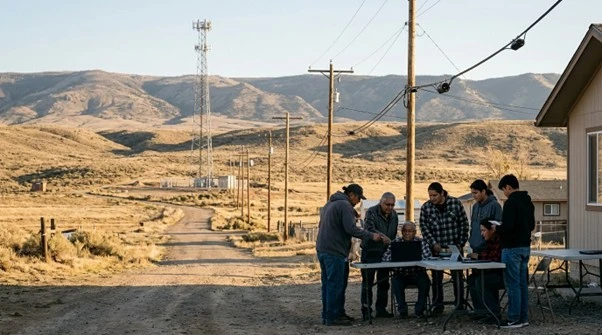
This lesson matters for everyone, no matter what industry you work in. The story of Indigenous network sovereignty isn't a minor, isolated example; it is the perfect blueprint of what happens when a community refuses to let outsiders control its digital future.
Network Sovereignty in Practice: What It Looks Like Across Industries
Moving from theory to implementation, network sovereignty manifests differently depending on the actor asserting it.
- For Nation-States (Geopolitical Control)
- How it appears: Through cloud sovereignty mandates, data localization laws, and strict restrictions on foreign-owned infrastructure.
- Real-world examples: The European Union’s push for technological independence from U.S. cloud providers.
- India’s growing insistence on robust data sovereignty frameworks that keep citizen data strictly within national borders.
- For Indigenous Nations (Self-Determination)
- How it appears: Owning and operating tribal broadband networks, establishing data governance protocols that reflect community values, and participating as equals in global internet forums.
- Real-world examples: The Māori Data Sovereignty Network and the Pacific Data Sovereignty Network, where communities build collective infrastructure to protect their digital future.
- For Organizations (Operational Independence)
- How it appears: Strategic decisions about where data is routed, which third-party vendors have access to traffic flows, and how to avoid over-reliance on a few consolidated cloud giants.
- The Bottom Line: For sensitive sectors like healthcare, finance, and critical infrastructure, the question "Does our network sovereignty protect us from this vendor?" has officially become a boardroom-level priority.
- For Emerging Technologies (Sovereignty Without Territory)
- How it appears: Decentralized, blockchain-based network architectures that offer a provocative new model of independence.
- The Big Question: As projects explore non-territorial network governance, they raise fundamental questions about what authority and recognition mean when a network spans multiple global jurisdictions without being bound by any single one of them.
The Technical Pillars: How Network Sovereignty is Anchored
In order for network sovereignty to become more than just a buzzword and an abstract idea within the boardrooms, it has to be implemented and developed around three major technical pillars. Without which the concept of digital sovereignty would remain just a concept and not an asset.
- Autonomous Data Infrastructure
One needs to start with controlling the physical infrastructure on which one’s data sits. Such implementation includes using localized data centers, sovereign cloud regions, and localized hardware instead of placing faith in foreign-controlled centralized public clouds.
- Decoupled Network Routing & Transit
Controlling one’s data infrastructure is not enough, one should control the routes it takes. Companies achieve this by creating independent routing systems and establishing their own dedicated fiber-optic transit lines with localized internet exchanges (IXs) and ensuring that no one can intercept or divert their traffic through any foreign jurisdictions.
- Cryptographic Sovereignty & Encryption
This becomes the last line of defense and can best be described as the mathematical aspect. Implementation of zero trust architecture and ensuring one is solely responsible for one’s encryption keys (BYOK), makes sure that any traffic traveling through a third-party vendor’s pipe will stay sovereign because the third party cannot decipher its contents without proper permissions.
The Next Frontier: Facing the Realities of Tomorrow
Network sovereignty is maturing fast, and it's expanding well beyond data storage. Two developments are shaping its next chapter.
Data Sovereignty "In Flight"
Most compliance thinking focuses on data at rest where files are stored, what server they live on. But data is almost never sitting still. It's constantly crossing borders through unpredictable routing paths, carrier peering agreements, and cloud traffic that leaks further than anyone planned. The real frontier now is managing data in flight guaranteeing, through deterministic transport paths and managed fiber networks, that sensitive data never physically passes through unauthorized foreign soil on its way from A to B.
Sovereign AI Compute
AI changes everything about this conversation. Training large models requires enormous compute power and massive data pools. Organizations and nations that depend entirely on a handful of foreign cloud providers for that compute are exposed to regulatory shifts, to trade disputes, to the whims of a company whose interests don't align with theirs. Countries and enterprises are responding by investing in localized AI data centers, regional hardware ecosystems, and independent training infrastructure. The goal: keeping the intelligence driving your systems strictly within your own legal and geographic boundaries.
Conclusion: Claiming Ownership of Your Own Informational Future

The idea of network sovereignty emerged in academia. It has since made appearances in courts and tribal governance assemblies. Now, it's present in conference rooms where boards meet and in purchasing committees where data centers are considered.
At its core, however, it has always meant the same thing: who has the right to narrate their own story according to their own terms, using infrastructure that is truly theirs to use.
Whether you're seeing this through the lens of a Native Nation deploying fiber throughout territory long robbed of any other resource, or a government deploying sovereign cloud infrastructure to shield its citizens from regulatory exposure, or a corporation finally considering questions of vendor lock-in: Ultimately, they're all headed to the same destination.
If you control the network, you control the future.