
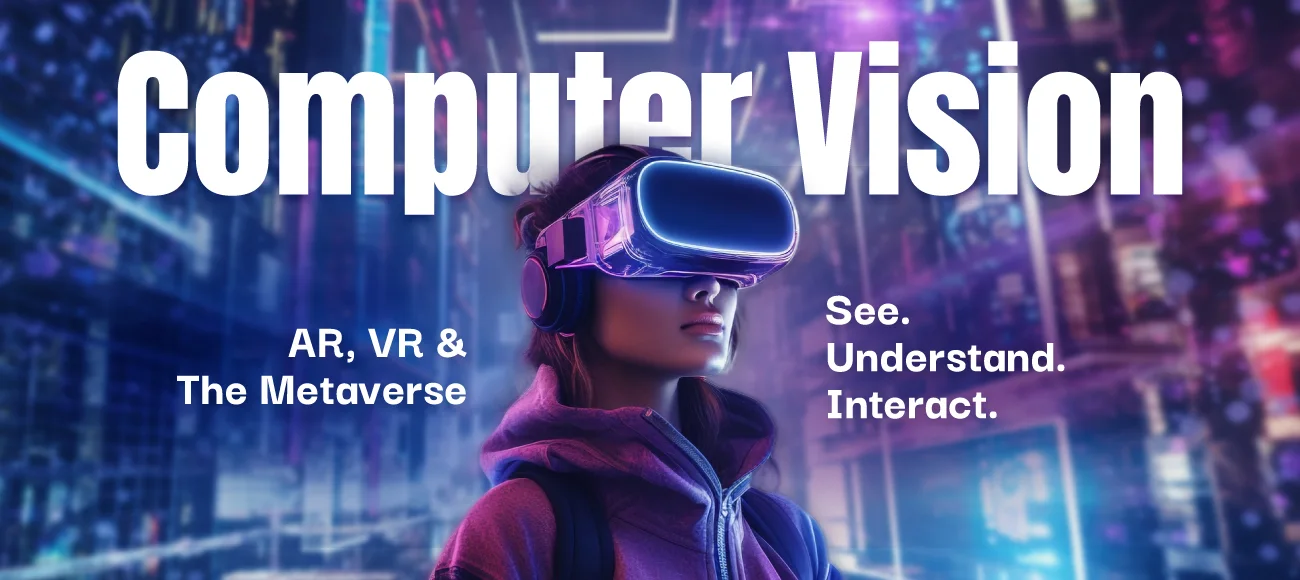
01 Dec Computer Vision: The Silent Power Behind AR, VR & the Metaverse
Are We Watching the Future, or Is It Watching Us?
Inside the Role of Computer Vision in AR, VR & the Metaverse
Technology today doesn’t just see — it understands. And that superpower comes from one game-changing field: Computer Vision. Whether you’re trying on virtual clothes, exploring a VR classroom, or attending a meeting in the Metaverse, computer vision works quietly in the background to make everything feel real, interactive and responsive.
But sometimes technology feels so smart that we start to wonder… Does it understand more than we think?
Let’s dive in and see.
What is Computer Vision?
Computer Vision in AR, VR, and the Metaverse is the technology that helps these systems “see” and understand the world. It detects faces, objects, surfaces, and movement so digital content can blend naturally with real environments or create realistic virtual experiences. In simple words, it gives these platforms the visual intelligence needed to make digital worlds feel real and interactive.
Key Applications in AR, VR and Metaverse
1. Augmented Reality (AR)
AR blends digital elements into your real surroundings, making life more interactive.
Computer vision helps AR:
- Detect faces, objects, and surfaces
- Understand depth and lighting
- Place virtual objects in the real world
How it’s changing the world:
AR makes decisions simpler and more visual — from checking how furniture looks at home to learning with interactive guidance. Shopping, education, and travel all become more engaging and efficient.
2. Virtual Reality (VR)
VR takes you away from reality and drops you into a world built with pixels and imagination.
With computer vision, VR can:
- Track your head, hands, and body
- Understand gestures
- Map your surroundings for safety
- Even detect emotions
How it’s reshaping the reality:
VR is revolutionizing how we learn, heal, train, and stay fit. It creates a safe, immersive environment from learning, and engaging experiences.
3. The Metaverse
The Metaverse connects virtual worlds where people work, socialize, play, and build entire digital identities.
Computer vision powers the Metaverse by:
- Creating realistic avatars
- Matching your facial expressions in real time
- Scanning real environments for blending seamlessly
- Supporting immersive social interactions
How it’s evolving the world:
It may redefine work, relationships, entertainment, and identity. When digital life becomes as meaningful as physical life, our choices and behaviors evolve too.
Why Computer Vision matters?
Computer Vision matters because it helps machines understand the world visually — just like humans do. It allows technology to recognize its surroundings, understand human behavior, react instantly, and personalize experiences. This is especially important in AR, VR, and the Metaverse, where everything depends on how well systems interpret what the camera sees. Computer vision helps devices detect surfaces, recognize faces, understand depth, and map environments, making digital objects behave naturally and virtual worlds feel real and interactive.
Real life application
Computer vision is already transforming our daily lives in powerful ways:
● Healthcare
Helps detect diseases, analyze scans, guide surgeries, and assist doctors with early diagnosis.
● Automotive & Transportation
Self-driving cars, smart traffic systems, lane detection, and collision alerts all rely on computer vision.
● Agriculture
Detecting crop health, monitoring soil, identifying pests, and helping farmers improve yield.
● Manufacturing
Quality inspection, automation, defect detection, and robot guidance — making factories smarter and safer.
● Security & Safety
Surveillance, face recognition, threat detection, and monitoring systems for public safety.
“Computer vision isn’t just the future — it’s already shaping our present.”
Conclusion:
Computer vision is helping AR, VR, and the Metaverse create a world where digital and real experiences blend naturally. It’s already transforming healthcare, education, shopping, entertainment, and the way we connect with others — and its impact grows every day.
But as technology becomes smarter and starts “seeing” more, we need to stay aware and understand its impact.
The future is exciting and full of possibilities — and by understanding its use, we can make sure how we use this technology wisely and responsibly.
To explore the bigger picture of how AR and VR evolved, where they are heading, and the possibilities they unlock, check out our detailed guide “The Marvelous Journey of Virtual Reality and Augmented Reality.”
Sorry, the comment form is closed at this time.