04 Jun How to Get Cited by ChatGPT, Perplexity & Google AI Mode
There’s a fresh benchmark standard in digital marketing that many teams haven’t caught on to yet: whether AI cites your content.
It’s not about ranking higher, or getting more clicks, but about being directly cited within the AI’s response that lots of people see.
When pages get mentioned in these AI summaries, they get 35% more organic clicks than those that don’t. Plus, visitors who come from Perplexity convert at around eleven times the rate of people coming from regular searches. This isn’t some vanity metric; it’s real pipeline action.
The question is no longer should you optimize for AI citations. The question is how and that answer is more specific than most guides let on.
Being Cited by AI Is Not the Same as Ranking on Google
Before we get into tactics, this difference is huge. Optimizing for “AI search” as one big category makes no sense – it’s like trying to optimize for social media without considering how LinkedIn differs from TikTok.
Each platform works differently. For instance, an analysis of 680 million citations across ChatGPT, Google AI Overviews, and Perplexity revealed that only 11% of domains are cited by both ChatGPT and Perplexity. Plus, another study of 34,234 AI responses showed a 46-times difference in brand citation rates between platforms.
This massive gap exists because each AI uses different methods to find info, prefers various sources, and has its own idea of “what’s trustworthy”.
Let’s break them down and look at these differences
How Each Platform Actually Decides What to Cite
ChatGPT
ChatGPT works in two different ways. If it’s drawing from its base training data without access to the live web, it pulls content from reliable sources around high-authority domains that were established before its training data was cut off. But when it uses its web browsing ability which is active for most folks; it then searches in real-time and judges the results itself.
In about 65.5% of cases where ChatGPT doesn’t need to turn to the web, answers come straight from its training data. Whether your info appears there depends on if it was part of the training set, which relates to how authoritative and fresh your content was when collected.
Beyond authority, ChatGPT looks into credential signals. If you’re querying for a specific service, it checks accreditation rates, certification success rates, and industry awards — basically, real-world verification boosts your chances of being cited.
Perplexity
Perplexity uses its own crawler to fetch fresh content at query time, so being up-to-date is crucial here; not like with ChatGPT’s fixed training data. This service generally cites sources that are authoritative, frequently updated, and relevant to the asked topic.
To get cited, make your page super structured with clear headers directly matching potential questions. For instance, if a section is titled “How does X work?”, and someone asks Perplexity the same question, your content fits perfectly.
Google AI Mode
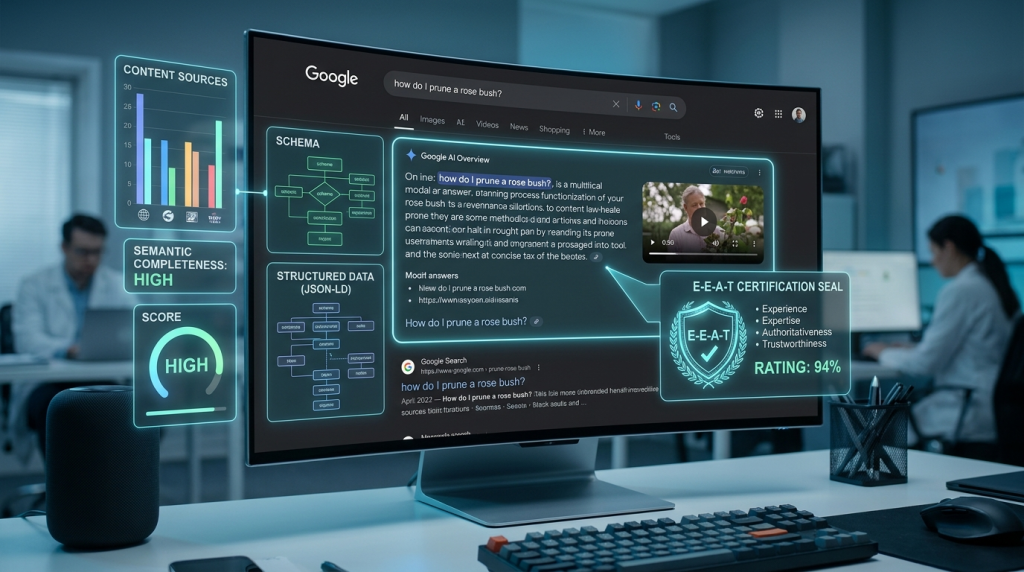
Google’s AI doesn’t just take info from the top-ranking organic results. They use a different system that pulls out passages, rates them, and might include them based on relevance. Just because you’re number one doesn’t mean you’ll always be featured. Now, Google looks at semantic completeness, structured data, E-E-A-T, and multi-modal content to pick what goes into the AI overview. Being ranked first isn’t makes sure thing anymore.
The Consensus Signal: Why One Source Is Never Enough
Here’s the biggest concern most teams miss entirely about how AI actually works. When AI platforms check out your website, they’re not just looking there. They look for the same info about your brand in different spots online. Think Reddit threads, YouTube, blogs from your industry, and review sites.
When these various places independently say the same things about your brand, AI feels confident in citing it. Without this cross-platform match-up, if your brand’s main existence is on just your site and nowhere else, AI doesn’t trust your claims. It can’t find that validation elsewhere, you see. So, the tool ends up favoring competitors who’ve made a bigger splash in more places online.
That’s why companies investing in PR, joining communities, third-party reviews, and guest post get cited more frequently. Not because these actions are directly “SEO,” but because they build a trustworthy image that AI picks up on, making it more likely to view the source as reliable and worthy of citation.
So, your GEO strategy isn’t just about content; it’s about making a presence everywhere your audience and industry talk. By making sure your voice pops up
What Actually Gets You Cited: The Practical Checklist
1. Write content that answers questions directly
AI wants clear responses, not just keyword-filled text. Focus each page on a question your readers ask. Answer it right away, within the first two sentences, then back it up. Put FAQ sections early, like before your conclusion. This mirrors how AI searches are set up making your pages easier to be found by search engines.
2. Strengthen your E-E-A-T signals
Focus on Experience, Expertise, Authoritativeness, and Trustworthiness. These elements aren’t just about ranking higher on Google; AI now favors content that’s easy to extract and ready to use as answers. Before anything else, domain trust and cross-source backing are checked out. Stuff like author bios, quotes, new data, and other site shoutouts all contribute here.
3. Use schema markup
Using schema markup makes it easier for AI to grasp your content. It influences how LLMs present web content too. Include Article, FAQ Page, and Organization schema on your main pages — at least that much.
4. Build external mentions deliberately
Don’t see them just as PR wins. They’re the independent corroboration signals AI looks for to verify your authority. In many cases, AI cites you after checking out five or six other external mentions first.
5. Keep content fresh and specific
Perplexity really values recent stuff. That vague evergreen content from 18 months ago won’t beat out a competitor who just updated their page last month with hard stats. The AI systems love concrete numbers, named tools, and real dated case studies. They trust these details enough to quote them.
How to Track Whether It’s Working
To see if it’s working, check these AI citation metrics: share of voice, which is how often your brand comes up in AI conversations; citation rate, the percentage of times your content is linked in relevant responses; sentiment analysis, how your brand is characterized by AI; and competitive share, how you compare to rivals in mentions.
Tools such as Profound and new GEO platforms monitor these across ChatGPT, Perplexity, and Google AI. Start basic: search your category on these platforms once a week, note who’s being cited, and keep a log. This simple manual method will show progress faster than any fancy dashboard can in the first month.
FAQs
Q1. How does AI decide what content to cite?
AI considers factors like authority, freshness, structure, E-E-A-T, and consistency across multiple sources. It favors content that provides clear, direct answers.
Q2. Why does Perplexity cite certain websites?
Perplexity prefers fresh, authoritative, and well-structured content with clear headings and direct answers.
Q3. Does traditional SEO still matter for AI search?
Yes. Strong SEO practices, quality content, and E-E-A-T signals help improve AI visibility and citations.
Q4. What is Answer Engine Optimization (AEO)?
AEO is the process of optimizing content so AI tools and answer engines can easily extract and present it as a direct answer.
Q5. How can I tell if my brand is being mentioned by AI tools?
You can check AI visibility by testing prompts in ChatGPT, Perplexity, and Google AI Mode and tracking citation and referral trends.
Conclusion
An AI citation isn’t just luck—it’s about having well-structured content that’s backed up by trustworthy sources, and verified by the platform’s algorithms.
Brands that want to show up in AI-generated suggestions need to manage their online presence proactively. Those who don’t could lose out to competitors they might not consider real threats.
The gap is opening now. Your job is to be on the right side of it before it becomes impossible to close.
Not sure how GEO differs from traditional SEO? Read our GEO vs SEO guide to understand the shift from rankings to AI citations.
Sorry, the comment form is closed at this time.