
23 Feb Spintronic Devices: The Future of Ultra-Fast, Low-Power Electronics
We are living in a world where data is growing faster than ever. AI models are becoming more complex. Devices are becoming smaller. Power consumption is becoming a serious problem. Traditional electronic systems rely on one thing: electron charge.
But what if we could use something more?
That’s where Spintronic Devices come in — a next-generation technology that uses not just the charge of electrons, but also their spin to store and process information. And this small change could lead to major improvements.
What Are Spintronic Devices?
Spintronic devices are advanced electronic components that use more than just the electric charge of electrons, they also use the spin of electrons, which is a very tiny property. You can imagine electron spin like a small arrow that can point in two directions – up or down. Spintronic devices use this direction to store and process data. Because they use both magnetism and electricity to operate, they work faster, consume less power, and even keep data without needing constant power supply.
In simple terms, traditional electronics move electrons to create signals, while spintronics devices use the spin to represent data. This makes them very useful for next-generation memory (like MRAM), AI hardware, sensors, and low-power computing systems. They are considered an important future technology because they can help reduce heat, save energy, and improve performance compared to current electronic devices.
Why do we even need Spintronic
Modern CMOS (traditional chip technology) is reaching limits in terms of physical size and power usage.
Here are the major issues:
- High heat generation
- High power consumption in AI and data centers
- Scaling limitations at the nano levels
- Memory bottlenecks
Spintronics provides solutions by:
- Reducing the energy needed for switching
- Enabling systems that can start instantly
- Combining memory + logic
- Improving the stability of stored data
It’s not just an upgrade — it’s a possible replacement for some future chip architectures.
Types of Spintronic Devices
1. MRMA (Magnetoresistive Random Access Memory)
MRAM is the most widely used spintronic device today. It stores data using magnetic states instead of electric charge.
- Data is stored as spin up (1) or spin down (0)
- It retains data even when power is off (non-volatile)
- Faster than Flash memory
- More durable than traditional RAM
Where it is used:
Automotive electronics, IoT devices, aerospace systems, and AI edge devices.
2. GMR & TMR Devices (Magnetic Sensors)
GMR devices were one of the earliest practical spintronic applications. They work by changing electrical resistance depending on the alignment of magnetic layers.
- When spins align → low resistance
- When spins oppose → high resistance
This resistance difference helps detect magnetic fields.
Applications:
Hard disk drive read heads, magnetic sensors, and precision measurement systems.
3. Spintronic Logic Devices
These devices aim to perform logic operations (like AND, OR, NOT gates) using spin instead of only electric current.
- Can combine memory and logic in a single device
- Reduce delays in data transfer
- Lower power consumption
These are still in the research stage but show great promise for future computing.
4. Spintronic Transistors
These are experimental devices designed to replace traditional CMOS transistors.
- Use spin polarization to control current
- Could reduce leakage power
- Enable smaller and faster chips
Currently under development in advanced research labs.
Real-World Use-Cases
Spintronics is not just a lab technology anymore. Some of its applications are already in use, and many are shaping the future of advanced electronics.
1. AI Accelerators
AI systems require massive data processing, which consumes a lot of power. Spintronic memory like MRAM reduces energy usage while offering faster data access. This helps AI chips run more efficiently, especially in data centers and edge devices like smart cameras and robotics.
2. Medical Diagnostics
Spintronic sensors are highly sensitive to small magnetic signals, making them useful in advanced medical equipment. They support more accurate imaging, early disease detection, and compact portable diagnostic tools with lower power consumption.


3. Secure Communication Systems
Because spintronic devices use stable magnetic states, they provide more reliable and secure data storage. This makes them suitable for defense systems, space electronics, and next-generation secure communication technologies.
4. Electric Vehicles (EVs)
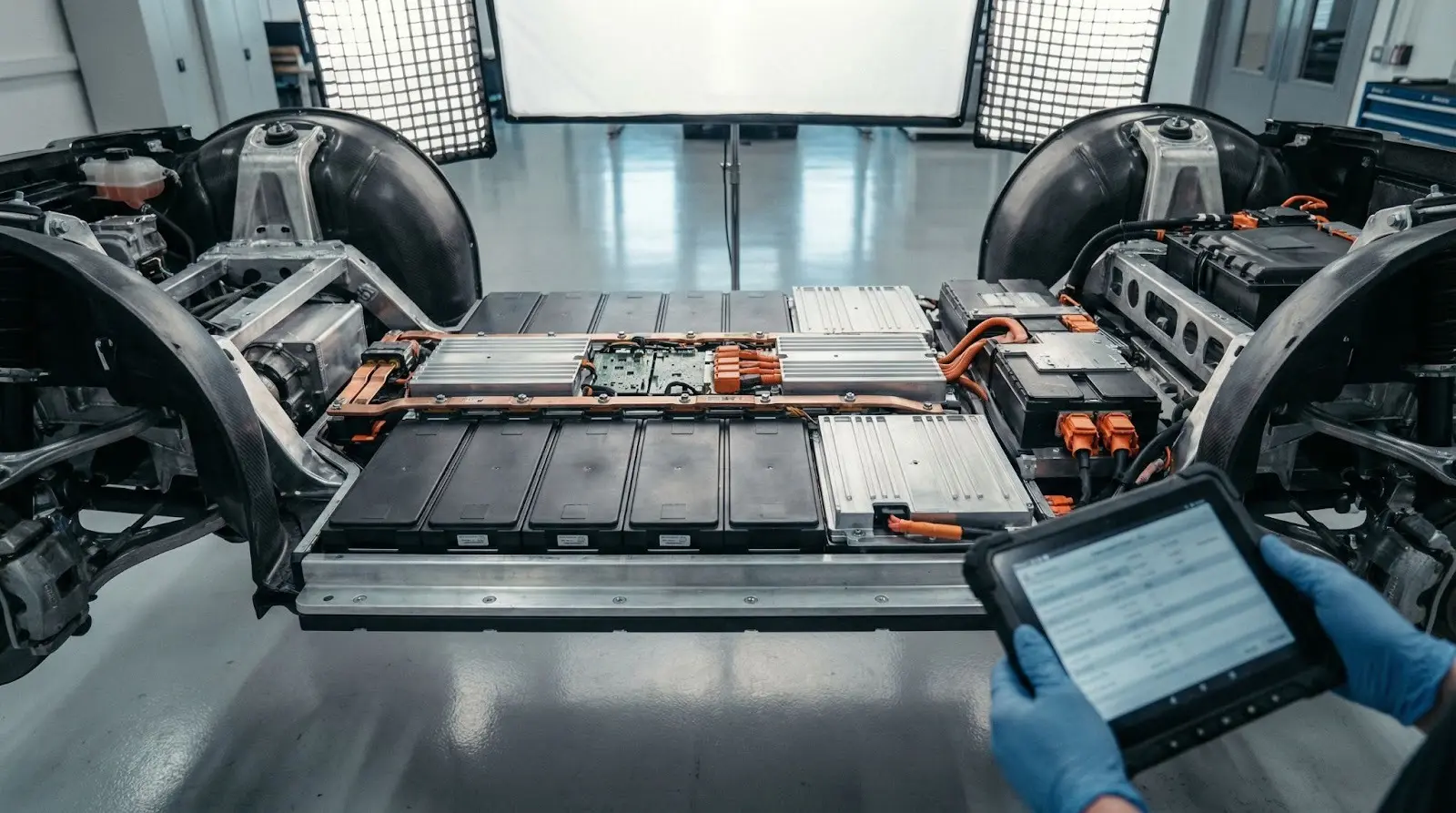
EV electronics must handle heat and power efficiently. Spintronic memory offers durability, low energy use, and reliable performance, improving battery management systems and vehicle control units.
In simple words, Spintronics helps make modern technology faster, safer and more energy-efficient, especially in AI, Healthcare, Security and electric vehicles.
Challenges in Spintronics
Despite its promise, there are hurdles:
- High fabrication cost
- Integration with existing CMOS systems
- Material stability issues
- Limited mass-market production
This is why it’s still considered emerging tech — not mainstream yet.
Market & Commercialization Trends
Spintronic technology is gradually moving from research labs to real commercial products. As industries demand faster, low-power, and more reliable electronics, spintronic devices are gaining strong market attention.
Key Market Trends:
Rapid Growth: The global spintronics market is growing quickly due to demand from AI, IoT, automotive, and data centers.
MRAM Leads Commercialization: Magnetoresistive RAM (MRAM) is already being used in real products and is the most commercially successful spintronic technology.
Semiconductor Industry Adoption: Major chip manufacturers are investing in spintronic memory and hybrid CMOS + spintronic solutions.
AI & EV Demand Boost: Energy-efficient memory for AI systems and electric vehicles is accelerating adoption.
Overall:
Spintronics is shifting from experimental research to practical application. While still emerging, it shows strong potential to become a key technology in future low-power and high-performance electronics.
Emerging Trends
Spintronics is moving from simple memory devices to advanced computing technologies. One major trend is improved MRAM with faster speed and lower power use for AI and edge devices. Another trend is hybrid CMOS + spintronic systems that combine traditional chips with spin-based memory for better performance and efficiency. Spintronics is also being explored for quantum computing, where electron spin can act as stable qubits. Researchers are developing new materials like alter-magnetic and topological materials to control spin more effectively.
Why Spintronics matters for the Future
Spintronics is important because traditionally electronics are reaching their limits in terms of power consumption, heat generation, and scaling. By using the electron’s spin along with its charge, spintronic devices can provide faster functionality, consume less energy, and retain data without constant power. This makes them highly suitable for AI systems, data centers, electric vehicles, and next-generation computing.
In simple terms, spintronics offers a more efficient and sustainable path for building the future of electronics.
Frequently Asked Question(FAQs):
1. What is a spintronic device?
A spintronic device is an electronic device that uses the electron’s spin (magnetic property) along with its charge to store and process data efficiently.
2. In which fields are spintronic devices used?
They are used in memory systems (MRAM), AI hardware, medical devices, secure communications, and electric vehicles.
3. Why are spintronic devices important for AI and data centers?
They reduce power consumption and heat while providing faster data processing.
4. What makes spintronic memory better than traditional memory?
It is faster, more durable, energy-efficient, and retains data even without power.
5. What is the future potential of spintronic devices?
They are expected to support next-generation low-power computing, neuromorphic systems, and quantum technologies.
Final Thought
Spintronics is shaping the future of electronics by providing faster, more energy-efficient, and reliable devices compared to traditional technology. As AI, electric vehicles, and smart systems continue to grow, the need for energy-efficient computing becomes more important. With proven applications like MRAM and ongoing innovation, spintronics is moving from research to real-world impact. Simply, it represents a smarter and more sustainable direction for next-generation electronics..
Sorry, the comment form is closed at this time.