


30 Mar Robotic Process Automation: Work Faster by Automating Repetitive Tasks
Nobody got into business to spend their day copying data from one screen to another. But for a long time, that’s exactly what the workday looked like for a lot of people — repetitive, manual, and honestly, a waste of good talent.
By 2026, most companies have moved past debating whether to automate. That question’s already answered. The focus now is on speed — what to automate first and how fast it can happen. Robotic Process Automation has become the go-to answer, quietly taking over the data entry, the scheduled reports, the system updates that follow the same steps every single time.
And what that frees up actually matters. When the repetitive work runs itself, people can focus on the stuff that genuinely needs a human — the judgment calls, the creative thinking, the conversations that move a business forward. That’s the real value RPA brings to the table.
What is RPA – Define it
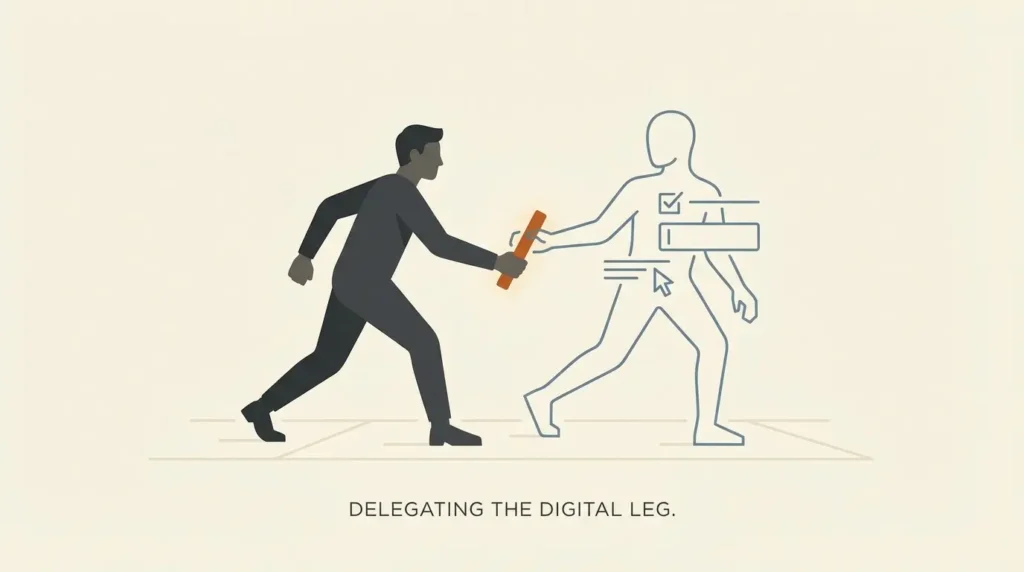
At its core, Robotic Process Automation is just software that does computer-based tasks the way a person would — except it doesn’t get tired, doesn’t lose focus, and doesn’t make mistakes.
Think of it as a virtual assistant that can day-by-day:
- Open applications
- Copy and paste data
- Fill out forms
- Perform calculations
- Generate reports on schedule
How it works (in a simple way):
The way it works isn’t complicated to understand either. You map out the process — every click,every field,every decision point — and the bot follows that map. It doesn’t improvise. It doesn’t skip steps. It just does what it was told, in the same order, every time.
Is it the same thing as AI?
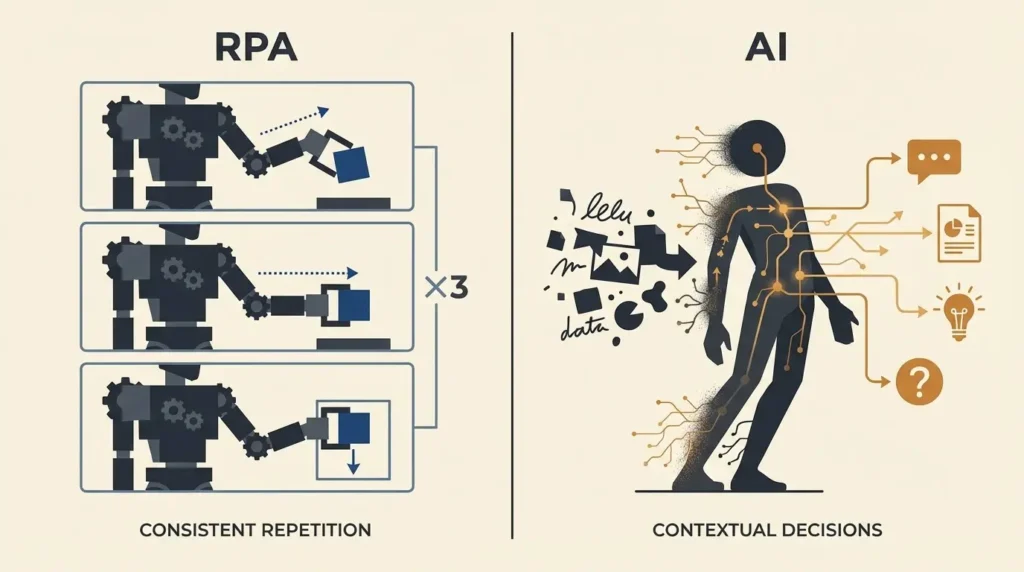
Not really, and the difference matters. AI is built to figure things out — it learns from patterns in data and makes decisions based on what it’s seen before. RPA doesn’t learn anything. It follows rules. If the rule says move this value to that column, that’s what happens, no interpretation involved.
That reliability is actually the point. You don’t want a bot making judgment calls on your payroll. You want it to do exactly what was specified, and nothing else.
RPA or Low-Code — Which One Do You Actually Need?
| RPA is the right call when… | Low-code makes more sense when… |
| The task is repetitive and follows the exact same steps every time | You’re building something new from scratch |
| No human judgment is needed — just execution | The process needs people to make decisions along the way |
| You’re working with existing systems and don’t want to touch them | You need deep integration with complex or legacy systems |
| Speed of deployment matters more than flexibility | You’re automating across an entire organization, not just one process |
| The process is stable and unlikely to change often | The workflow is likely to evolve and needs room to grow |
How RPA become mainstream
RPA didn’t appear overnight. It grew out of things people were already doing — macros, scripts, screen scrapers — tools that worked until they didn’t, and usually needed someone technical nearby to keep them running.
In the early 2010s, dedicated platforms like UiPath, Automation Anywhere, and Blue Prism changed that. They made automation more stable, more scalable, and built for actual business use rather than IT workarounds.The real turning point was when these tools went low-code. Once non-technical people could build automations themselves without filing an IT request, adoption moved fast — and it hasn’t slowed down since.
Benefits of Robotic Process Automation (RPA)
1. Saves Time What takes a person hours, a bot handles in minutes. No pacing, no slowing down, no end-of-day fatigue.
2. Cuts Costs Instead of hiring more people to handle growing volumes, you scale the automation. The cost difference adds up fast.
3. Better Accuracy Bots follow rules exactly, every single time. No typos, no missed fields, no errors creeping in after the hundredth repetition.
4. Works 24/7 No shift changes, no sick days, no overtime. If the work needs to run overnight, it runs overnight.5. Free People Up When the repetitive work is gone, people can focus on things that actually need a human — thinking, deciding, problem solving. Most teams feel that shift pretty quickly.
Leading RPA Tools to Boost Business Efficiency
UiPath — Easy to learn, strong community support, and extensively used across diligence. Great starting point for robotization.
Automation Anywhere — Offers cloud-based solutions with powerful analytics and scalability for large businesses.
Blue Prism — Highly secure and reliable, ideal for organizations that need strict compliance.
Microsoft Power Automate — Perfect for businesses already using Microsoft tools like Excel, Outlook, and Teams.
Robocorp — Developer-friendly and flexible, great for those who prefer coding-based automation.
RPA for different industries
RPA is not limited to one sector—it’s being used almost everywhere in 2026 to simplify operations and reduce manual effort.

Banking & Finance: RPA automates repetitive tasks like transaction processing, KYC verification, and fraud checks, helping banks deliver faster and more secure services to customers.
Accounting & Auditing: RPA simplifies financial tasks such as invoice processing, payroll management, and report generation, ensuring high accuracy and saving time during audits.

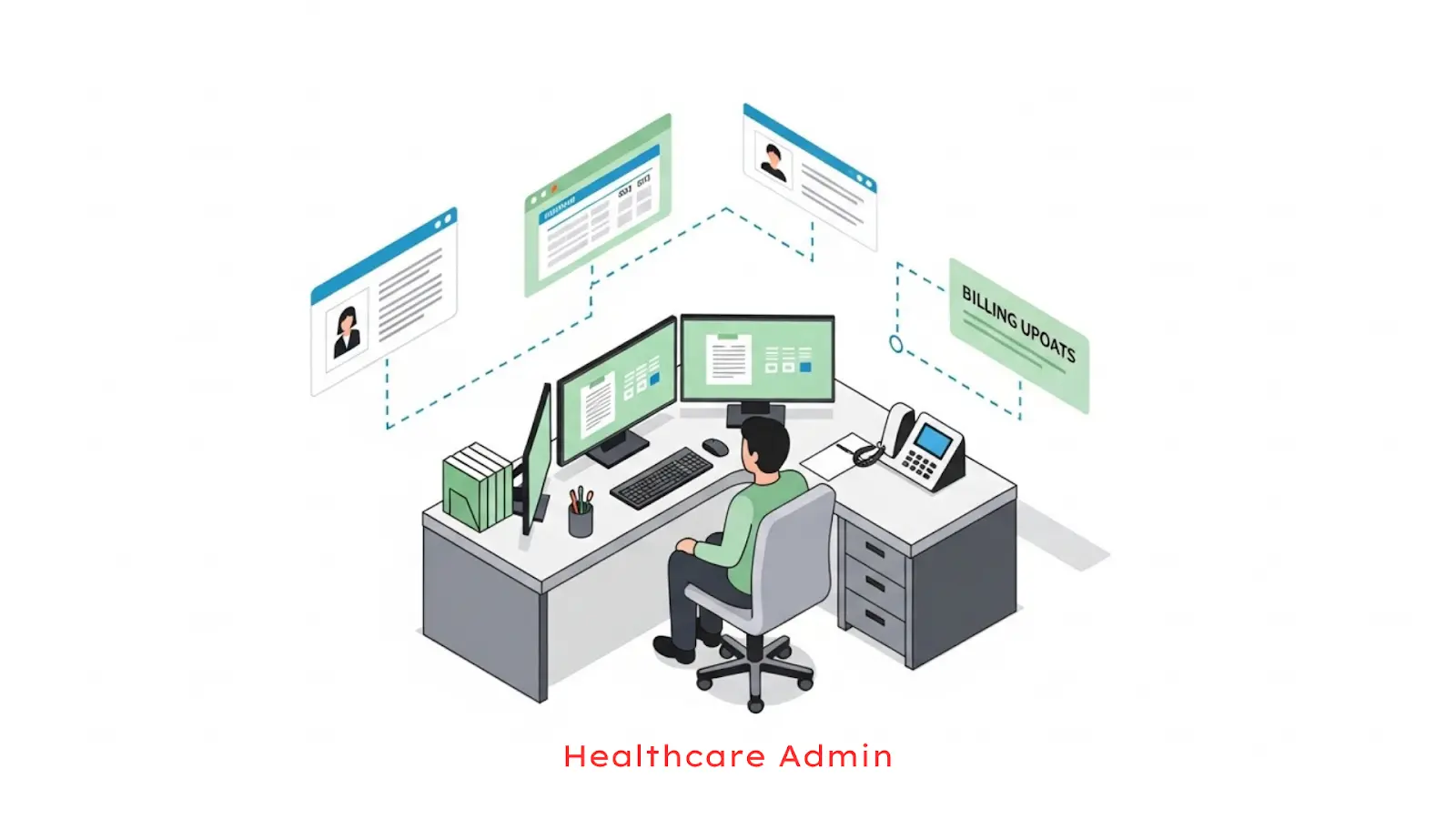
Healthcare: In healthcare, RPA helps manage patient records, schedule appointments, and handle billing, allowing staff to focus more on patient care rather than paperwork.
Small Businesses: For small businesses, RPA automates daily tasks like emails, customer support, and data entry, helping them operate efficiently even with limited resources.

Overall, RPA helps every industry reduce workload, improve accuracy, and work more efficiently.
Real-Life use-cases
RPA is already part of our daily business, even if we don’t always notice it.
– Excel Automation: Automatically updating and managing large datasets
– Invoice Processing: Reading and entering invoice data into systems
– Inventory Management: Moving data between different platforms
– Customer Support: Handling basic queries using automated workflows
– Banking: Faster loan approvals and document verification
These examples show how RPA simplifies complex tasks in a very practical way.
Future Scope
RPA is evolving fast. It’s no longer just about following fixed rules — pairing it with AI means bots can now handle messier inputs, make basic decisions, and get better over time. The gap between automation and actual intelligence is narrowing.
The bigger shift is hyper automation — connecting entire workflows end-to-end rather than automating isolated tasks. That’s where most organizations are heading, and the ones already moving in that direction are pulling ahead.
Demand for people who understand this space is growing steadily. Companies know where they want to get to — they just need the right people to get them there.
Frequently Asked Questions (FAQs):
1. What is RPA in simple terms?
Software that handles repetitive computer tasks automatically, so humans don’t have to.
2. Is RPA a good career in 2026?
Yes. Demand is outpacing supply right now, which is a good place to be when you’re building a skill set.
3. Do I need coding skills?
Not necessarily. Most tools are built for non-technical users. Knowing some scripting helps, but it’s not a requirement to get started.
4. Which tool should I start with?
UiPath. Largest community, most beginner-friendly, easiest to find help when you’re stuck.
5. Where is it used the most?
Banking and finance lead the way, followed by healthcare, retail, and IT — basically anywhere with high-volume, repetitive processes.
Conclusion
Robotic Process Automation has become a key part of modern business operations in 2026. It’s no longer just about saving time — it’s about working smarter and staying ahead in a competitive market.
As RPA continues to evolve with AI and other technologies, its impact will only grow stronger. Whether you’re a student exploring career options or a business looking to scale, RPA offers endless opportunities.
Final Thought:
Automation doesn’t replace people—it empowers them. By taking over repetitive tasks, RPA allows humans to focus on innovation, creativity, and growth.
Sorry, the comment form is closed at this time.