

08 Dec Fog Computing: Bringing Cloud Power Closer to the Real World
Fog Computing: Where Cloud Meets the Edge
Making data faster, smarter, and closer than ever!!
In today’s hyper-connected world, data is being generated every second — by smartphones, IoT devices, sensors, vehicles, and numerous machines around us. Traditionally, all this data was sent to the cloud for processing. However, with billions of connected devices, cloud dependency creates delays and higher network traffic.
In our previous blog on Edge Computing, we explored how bringing computation closer to devices helped reduce delays and lessen cloud reliance. Edge computing processes data directly on or near the device for faster responses, but edge devices have limited power. They can’t handle heavy workloads or large-scale data on their own — and this is where Fog Computing steps in.
What is Fog Computing?
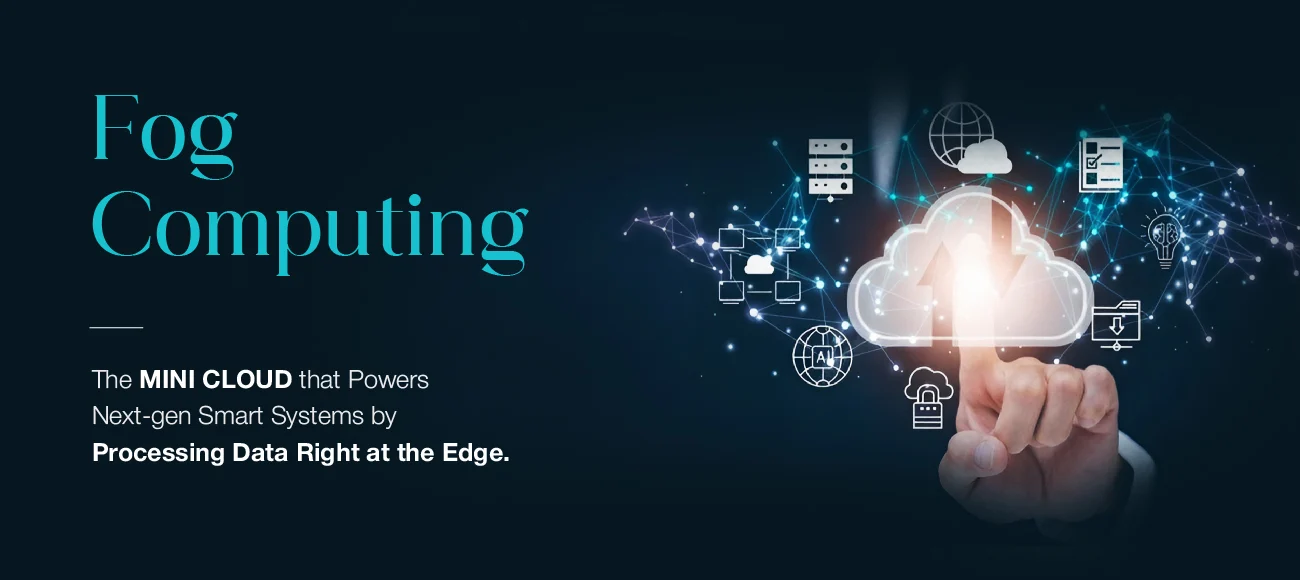
Fog computing is a modern technology that brings data processing, storage, and intelligence closer to where information is created. Instead of sending everything to distant cloud servers, it uses nearby devices like routers, gateways, and local servers to quickly analyze and manage data. This “mini cloud near the edge” reduces delays, improves security, and supports real-time decisions possible — making systems like smart cities, connected vehicles, and IoT devices faster, smarter, and more efficient.
Fog Computing Architecture
Fog computing sits between the edge and the cloud to enable faster data processing.
Edge Devices → Fog Layer → Cloud
Edge Devices: Sensors, smart cameras, and IoT devices generate raw data.
Fog Layer: Fog nodes (routers, gateways, micro data centers) process, filter, and store data locally for quick decisions.
Cloud: Handles heavy analytics, long-term storage, and large-scale processing.
This setup enables quicker decisions and more efficient data handling across connected devices.
Understanding the Basic Flow of Fog Computing
Here’s a simple step-by-step process of how it works:
1. IoT devices collect data — sensors, cameras, machines, and vehicles continuously produce raw data.
2. Data moves to nearby fog nodes — routers, gateways, or micro-servers placed close to the devices..
3. Fog nodes process data locally — they filter, analyze, and make quick decisions without relying on the cloud.
4. Only necessary data goes to the cloud — for long-term storage, deep analytic, and historical insights are handled by cloud servers.
5. Real-time actions happen instantly — responses such as traffic control adjustments, safety alerts, or automated device responses without delay.
This simple flow shows how fog computing reduces latency, cuts down bandwidth usage, and boosts system efficiency.
Benefits of Fog Computing
1. Faster Response Time: Essential for real-time processing in smart traffic systems, industrial automation, and autonomous vehicles.
2. Lower Bandwidth Usage: Only important or filtered data is sent to the cloud.
3. Improved Data Security: Local processing reduces exposure to external threats.
4. Higher Reliability: Fog nodes operate even if cloud connectivity fails.
5. Scalability: Perfect for smart cities, industries, healthcare, and large IoT ecosystems.
This combination of benefits makes fog computing essential for modern, connected environments.
Real-World Applications
1. Smart Cities
Helps traffic lights, surveillance cameras, pollution sensors, and parking systems make decisions locally.
This allows real-time responses — such as adjusting traffic flow instantly or detecting incidents without cloud delays.
2. Healthcare & Remote Monitoring
Medical wearable and hospital equipment generate huge amounts of patient data. Fog nodes process this data instantly to send quick alerts and ensure timely actions.
This reduces dependence on cloud servers and improves patient safety.
3. Industrial IoT (Smart Factories)
Factories use fog computing to analyze machine data on the spot for predictive maintenance and quality control.
By catching issues early, it reduces downtime and improves production efficiency.
4. Autonomous Vehicles
Self-driving cars rely on ultra-fast processing for navigation, obstacle detection, and safety decisions.
Fog computing supports these tasks by providing nearby processing points instead of waiting for cloud responses.
5. Smart Homes
Devices like smart thermostats, cameras, and appliances use fog nodes to communicate quickly and function smoothly.
This ensures faster automation and better device-to-device responses.
Security, Challenges, and Limitations
While fog computing offers many benefits, security must be carefully managed. Best practices of fog computing include encrypting device communication, verifying device identity, applying frequent firmware updates, and monitoring networks for unusual activity. However, challenges in implementing fog computing include higher setup costs, complex integration with existing IoT devices, and maintaining consistent security across many distributed nodes.
To Summarise
Fog computing continues to evolve as a key technology powering smart cities, transportation systems, and connected IoT environments. As the demand for real-time processing grows, this “mini cloud” will remain essential for building responsive, efficient, and intelligent digital systems.
Sorry, the comment form is closed at this time.