

02 Apr AI Governance & Ethical AI: From Curiosity to Trust
Artificial Intelligence is no longer something futuristic concept, it’s already here now shaping how we live, work, and make decisions. From recommending what we watch to helping doctors diagnose diseases, AI is everywhere.
But here’s the real question:
Just because we can build AI… does it mean we always should? This is where AI governance and ethical AI come into the picture. These are not just technical vocabulary words; these are principles responsible for accessibility, fairness, and trust.
Why AI Needs Rules
Every day, AI systems are becoming more and more powerful. But with power comes risk.
Imagine what if there were an AI system that unfairly denies someone a loan… or a hiring tool that silently favors one group over another? These are not hypothetical problems — they are already happening.
Without proper rules:
- Bias can go unnoticed
- Privacy can be violated
- Decisions can become unexplainable
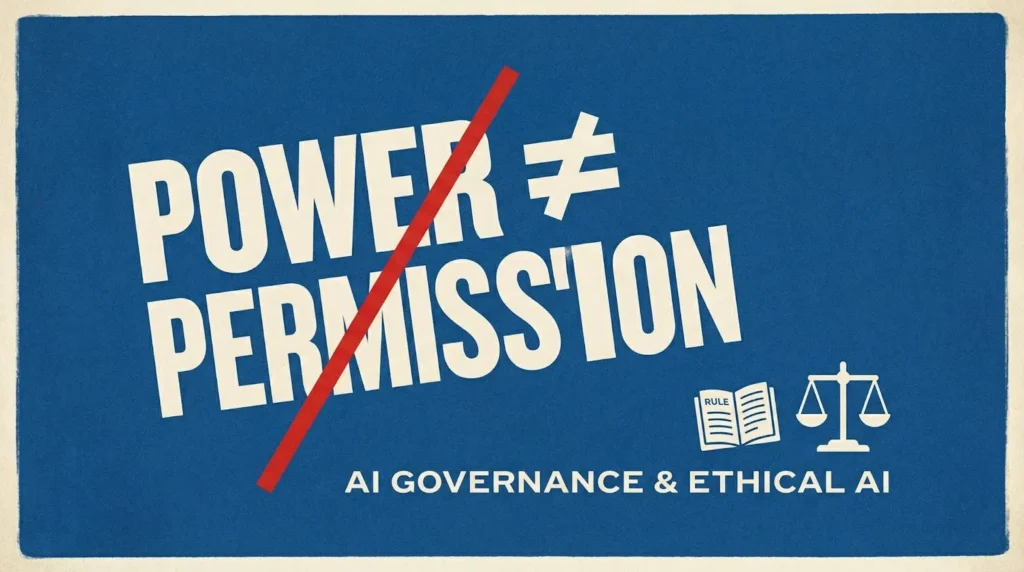
AI has no intention: it just amplifies the data and reasoning we feed it. That’s why governance is critical. It ensures that AI works for people, not against them..
What is AI Governance & Ethical AI?
Let’s simply them:
AI Governance is about creating systems, policies, and controls to manage how AI is developed and used. Think of it as the rulebook.
Ethical AI is about ensuring AI behaves in a morally responsible way. It focuses on fairness, transparency, and accountability.
In short:
Governance = How we control AI we use
Ethics = How we guide AI to “do the right thing”
Both concepts go hand in hand. One without the other doesn’t makes sense.
Key Risks & Challenges in AI
Even with rapid advancements, AI brings along a set of challenges that cannot be ignored:
Bias in Data – AI systems are trained on data sets; if this data is inherently biased, then the outcome will be unfair and biased towards certain classes of people without any apparent reason.
Privacy Issues – AI systems require access to a lot of personal information and data; this has created a lot of apprehensions regarding how this data is being used and stored.
Lack of Transparency – AI systems are like a ‘black box,’ and one cannot really understand how a particular outcome is being achieved.
Security Risks – AI systems are also susceptible to hacking and misuse if proper measures are not taken.
These challenges make one thing clear: While making AI is easy, making responsible AI is what is really
Sector-Wise Applications
AI is not used in the same manner in all places, especially in a multicultural country like India, where each sector has its own demands and responsibilities. Thus, it is not possible for AI governance to be conducted in a single manner.

In healthcare, AI has to be used very carefully, as it is a matter of people’s lives. Thus, it is very important that AI is used accurately, with consent, and in a manner that protects medical information.
In finance, AI is used in banking, loans, and detecting deceitful activities. Here, it is very important that AI is used in a fair and unbiased manner, so that no person or small business is subjected to unfair treatment by AI.


In education, it is very important that AI is used in a manner that supports teachers and students, without replacing them. Thus, it has to be used in a manner that improves learning, is accurate, and protects student information.
Large Tech companies hold more user data than any government or institution. Their responsibility is correspondingly greater: ensure transparency in how content is curated, avoid information monopolies, and treat user data as a trust, not a commodity.


In the government and public sectors, AI is being implemented in smart cities, digital services, and governance. In these sectors, the key focus should be on using AI to better the welfare of the citizens while simultaneously ensuring the rights of citizens are not compromised and transparency is maintained.
In all these sectors, however, there is one thing that stands out:
AI in India needs to not only be powerful but also responsible, inclusive, and trustworthy for all citizens.
Future of Responsible AI
The future of AI is not only about intelligent systems; it is more about responsible systems.
We are already witnessing:
- The implementation of AI regulations by governments
- The establishment of ethical AI teams within organizations
- The emphasis on transparency and accountability
Responsible AI is a competitive advantage.
Frequently Asked Questions (FAQs):
1. What is the difference between AI governance and ethical AI?
AI governance focuses on the rules, policies, and processes to manage AI systems, while ethical AI ensures those systems operate fairly, transparently, and responsibly.
2. Why is AI governance important for businesses?
AI governance helps businesses reduce risks, ensure compliance, protect user data, and build trust by making AI systems more reliable and accountable.
3. What are the main risks associated with AI?
Key risks include data bias, lack of transparency, privacy concerns, and potential misuse or security vulnerabilities in AI systems.
4. How can organizations implement ethical AI practices?
Organizations can implement ethical AI by creating clear policies, using unbiased data, monitoring AI decisions, and ensuring transparency and accountability.
5. Which industries need AI governance the most?
Industries like healthcare, finance, education, and large tech companies need strong AI governance due to their high impact on people and sensitive data.
Conclusion: Building AI That Deserves Trust
AI is one of the most powerful technologies of our time. But without governance and ethics, that power can easily go in the wrong direction.
The goal is not to slow down innovation — but to guide it.
Because in the end, AI is not just about algorithms.
It’s about people and the future belongs to those who build AI that is not only intelligent… but also fair, safe, and trustworthy.
Sorry, the comment form is closed at this time.