

16 Apr Why TinyML is the Future of AI Model Optimization
When talking about Artificial Intelligence in the present time, people tend to think of high-performance models that are hosted in huge servers. Indeed, such models are great in terms of accuracy but at the same time, they are huge in size, slow, and require much energy to function. Let’s consider common everyday devices such as watches, smartphones or any kind of sensors. None of these gadgets have enough resources to perform big models.
That is when the concept of Tiny ML and efficient AI comes into action.
Where Traditional AI Models Lack
Traditionally, most AI models are designed with efficiency as their top concern. While this is effective under controlled circumstances, it poses some problems when trying to integrate such technology into everyday usage.
Some of these limitations include:
· Need for powerful hardware like GPUs
· Heavy reliance on cloud processing
· More latency as a result of data processing
· High power consumption
As a result, these systems may not be applicable in situations where a fast response time is needed or where there is little power available.
What TinyML and Efficient AI actually mean
It becomes quite obvious that tiny ML technology entails running machine learning algorithms on resource-constrained devices. On the other hand, efficient artificial intelligence implies optimizing these algorithms to operate using minimum resources but still delivering satisfactory results.
Basically, this means that there is no need for sending data somewhere else because the device will deal with it on its own. Besides, everything will happen quickly and reliably without relying on any Internet access.

Why Is This Methodology Getting so Much Attention?
Take a glance at your surroundings. Everything seems to be turning smart now, from wearable fitness trackers to automated homes, where devices should think and act quickly.
These needs give rise to several requirements, such as:
· Decisions made immediately
· No delays in responding
· Enhanced data security
· Low power utilization
Efficient AI aligns well with these expectations. This technology ensures that devices analyze information independently and do not require directions from distant servers.
How AI Models Can Be Efficiently Made
Efficiently designing AI models does not necessarily mean shrinking the model’s size arbitrarily. It involves intelligent ways to make AI models efficient in size while preserving performance.
Some examples of commonly applied strategies for making AI models efficient are:
Model Compression: This approach consists of eliminating all unnecessary information from the model in order to reduce its overall size.
Quantization: This technique makes sure that the numbers used in a neural network are represented in a simpler form.
Pruning: This technique entails the removal of all unnecessary information from the model.Knowledge Distillation: Here, the smaller model is trained using information from the more powerful model.
The above-discussed techniques enable efficient design of AI models.
Applications of TinyML/Efficient AI in the Real World
1. Smartphones (AI functions performed locally)
These devices use Efficient AI to perform face recognition, camera optimization, and digital assistant functions. The AI functions run locally, giving faster results and ensuring privacy since there is no need for an internet connection.


2. Control Systems for Cars (Driver assistance systems)
Efficient AI runs on cars to help in lane detection, object detection, and checking the condition of the driver. This gives faster reaction time, which is important for safety.
3. Diagnostic Medical Devices (Hand-held Devices)
These devices measure the physiological parameters like heart rate and blood oxygen saturation. This helps in faster diagnosis, especially in remote locations where there is poor access to the internet.


4. Smart Agriculture (Precision farming)
The adoption of tiny AI sensors makes it possible to monitor soil, crops, and environmental conditions constantly and take timely actions.
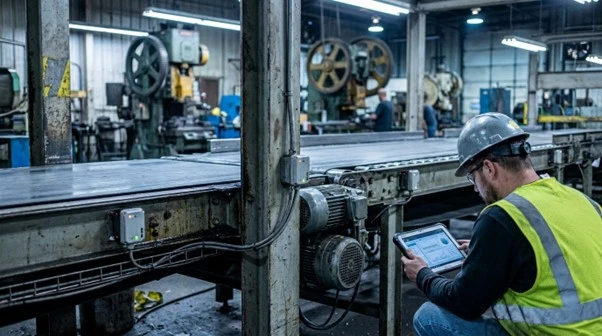
5. Predictive maintenance (IIoT devices)
The devices that employ TinyML technology analyze vibrations and temperature changes, which indicate future malfunctions.
Benefits That Make a Real Difference
The impact of Efficient AI can be clearly seen through its advantages:
- Faster response times since there is no delay from cloud communication
- Lower power usage, which improves battery life
- Ability to work even without internet connectivity
- Reduced costs because of less dependence on cloud services
- Better data privacy as information stays on the device
These benefits are especially important in today’s world, where efficiency and speed matter more than ever.
Challenges that still exist
Despite being highly beneficial, Efficient AI also faces a number of problems.
Firstly, the maintenance of accuracy is very difficult. While reducing the size of a model inevitably means that some degree of accuracy will have to be sacrificed, dealing with a constrained environment can also complicate the optimization process.
The second problem is that all the models are equally hard to reduce in size. There are some applications where it becomes necessary to conduct large-scale computations.
That said, constant advancements in technology help to overcome these challenges little by little.
How Things Will Be in the Future
Moving forward, there is no doubt that Efficient AI will have a big impact on the evolution of technology. Devices will increasingly adopt AI independently, without relying on cloud-only technology.
Other things we should be prepared for include:
· Advancements in automated model optimization
· Advances in power-efficient computing
· Creation of hardware dedicated to low-power AI applications
· Edge-cloud computing compromise for optimal efficiency
All these trends signal a bright future for AI.
Frequently Asked Questions (FAQs)
1. What is TinyML and why is it trending now?
TinyML refers to running AI models on small, low-power devices. It is trending because of the growing use of IoT devices and the need for real-time, on-device processing.
2. How does Efficient AI improve device performance?
Efficient AI reduces model size and complexity, allowing devices to process data faster, consume less power, and deliver quick results without relying on cloud servers.
3. Why is on-device AI becoming more important in 2026?
On-device AI is important due to increasing demand for faster responses, better privacy, and reduced internet dependency in smart devices and applications.
4. Does optimizing AI models affect accuracy?
Optimization can slightly impact accuracy, but modern techniques aim to maintain a strong balance between performance and efficiency.
5. Where is Efficient AI commonly used today?
It is widely used in smartphones, wearables, automotive systems, smart home devices, and industrial IoT for real-time data processing and automation.
Final Thoughts
Artificial intelligence doesn’t always have to be big and bulky to be effective. Sometimes, it’s the small models that do the best job, particularly when they’re applied practically.
TinyML and Efficient AI are shifting the paradigm when it comes to artificial intelligence. They emphasize efficiency and speed, and make AI more usable than ever before.
Ultimately, what makes AI truly powerful isn’t just its strength, but how effectively it can be implemented where it really counts.
Sorry, the comment form is closed at this time.