
07 May Data Sovereignty: Your Data Travels More Than You Think
You store data in the cloud.
You run systems on top of it.
You assume it stays where you put it.
It doesn’t.
And that’s where the problem begins.
Because control over data is only one part of a much larger digital sovereignty problem.
In 2026, the question is no longer “Do you have data?”
It’s “Do you know where it actually goes and who controls the systems it moves through?”
What Is Data Sovereignty, Really?
At a surface level, data sovereignty is simple.
“It means data is governed by the laws of the country where it is stored.” But that definition doesn’t hold up in real systems.
Because data today is not static.
It doesn’t sit in one place waiting to be used.
It moves.
It is processed, replicated, cached, backed up, and accessed, often across multiple regions at the same time.
So, the real definition becomes this:
Data sovereignty is not about where your data is stored.
It’s about every place your data touches and who controls those points.
Why Your Data Doesn’t Stay Where You Think It Does
Most businesses still operate with a simple assumption:
“We chose the region. So, the data stays there.” – That assumption is outdated.
Cloud systems are designed for speed and redundancy, not control.
Which means:
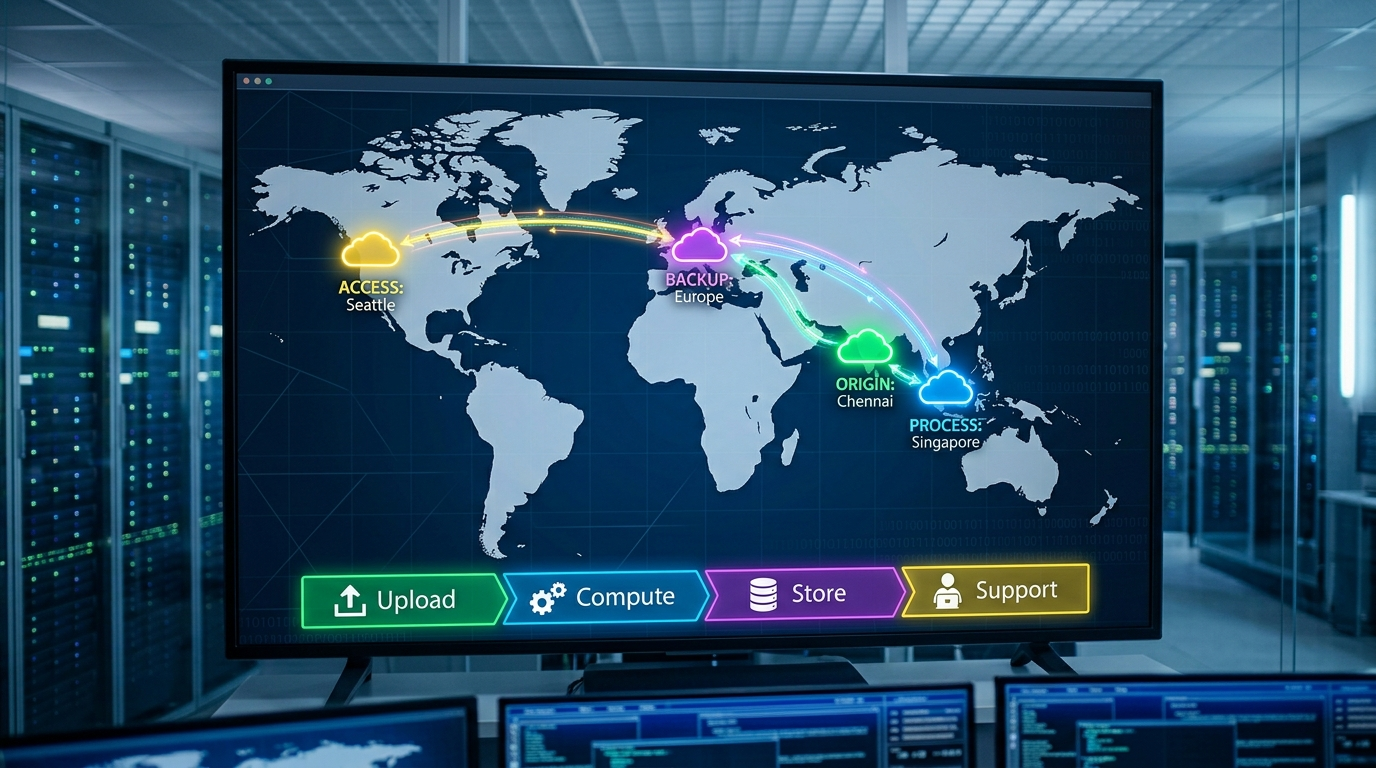
- Data is replicated across regions
- Processing happens wherever compute is available
- Backups exist outside primary locations
- Access is global by default
You don’t see this happening.
But it happens anyway.
And as a result, a single dataset can exist under multiple legal systems at once.Not by design.
But by architecture.
The Problem Isn’t Storage. It’s Movement.
This is where most conversations go wrong.
They focus on data location.
But location is only one part of the equation.
Because even if your data is stored in one country:
- it can be processed somewhere else
- accessed from another
- analyzed through third-party systems
So the real issue is not: “Where is your data stored?”
It’s: “Where is your data moving?”
And more importantly: “Do you have control over that movement?”
Ownership vs Control: The Gap No One Talks About
You created the data.
You use the data.
So naturally, you assume you own it.
But ownership in digital systems is not absolute.
This is also where digital sovereignty starts becoming more than a technology discussion — it becomes a control discussion.
Because the moment your data enters:
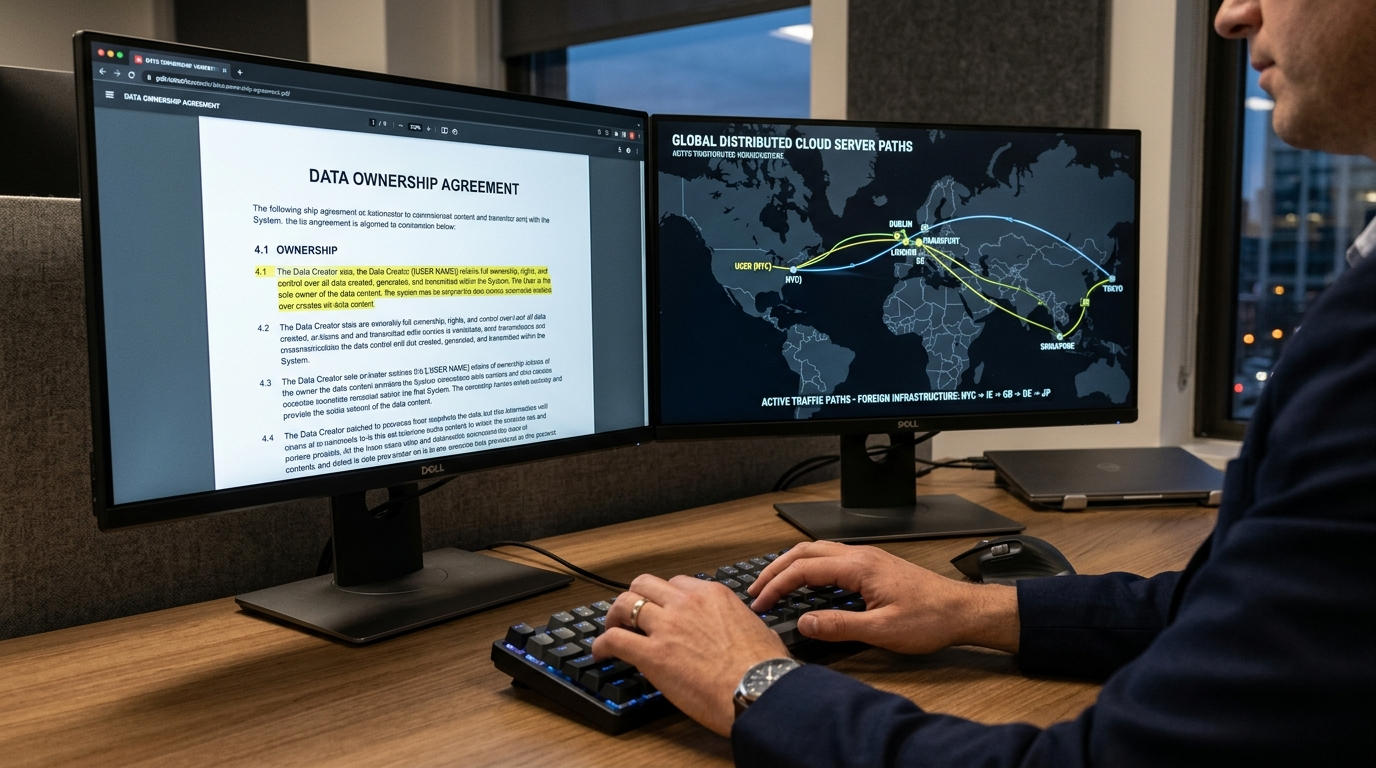
a cloud platform
a SaaS tool
an AI system
…it becomes part of an environment you don’t fully control.
The infrastructure isn’t yours.
The processing logic isn’t yours.
The movement paths aren’t always visible.
So the question shifts: If your data depends on systems you don’t control — how much ownership do you really have?
Where Businesses Lose Visibility
Not at the surface level. Everything looks fine there.
Dashboards work.
Systems run.
Data is accessible.
The loss happens underneath. In:
- background processing
- third-party integrations
- cross-region replication
- silent data transfers
None of these are visible in daily operations. But all of them affect control.
And over time, this creates a pattern:You still use the data.
But you no longer fully understand it.
Why This Is Becoming a Business Risk
This isn’t just a technical nuance anymore. It’s turning into a business problem. Because three things are happening at the same time:
1. Regulations are tightening
Governments care about where data resides and how it moves.
And they expect businesses to know the answer.
2. Systems are becoming more distributed
Cloud, APIs, AI tools — everything increases data movement.
Which reduces clarity.
3. Decisions are becoming data-dependent
The more your business relies on data, the more risky it becomes to not fully control it.
Put together, this creates a simple reality: The less you understand your data movement, the higher your operational risk.
What Control Actually Looks Like
Control doesn’t mean locking everything down.
It means knowing what’s happening.
In practical terms, it starts with clarity:
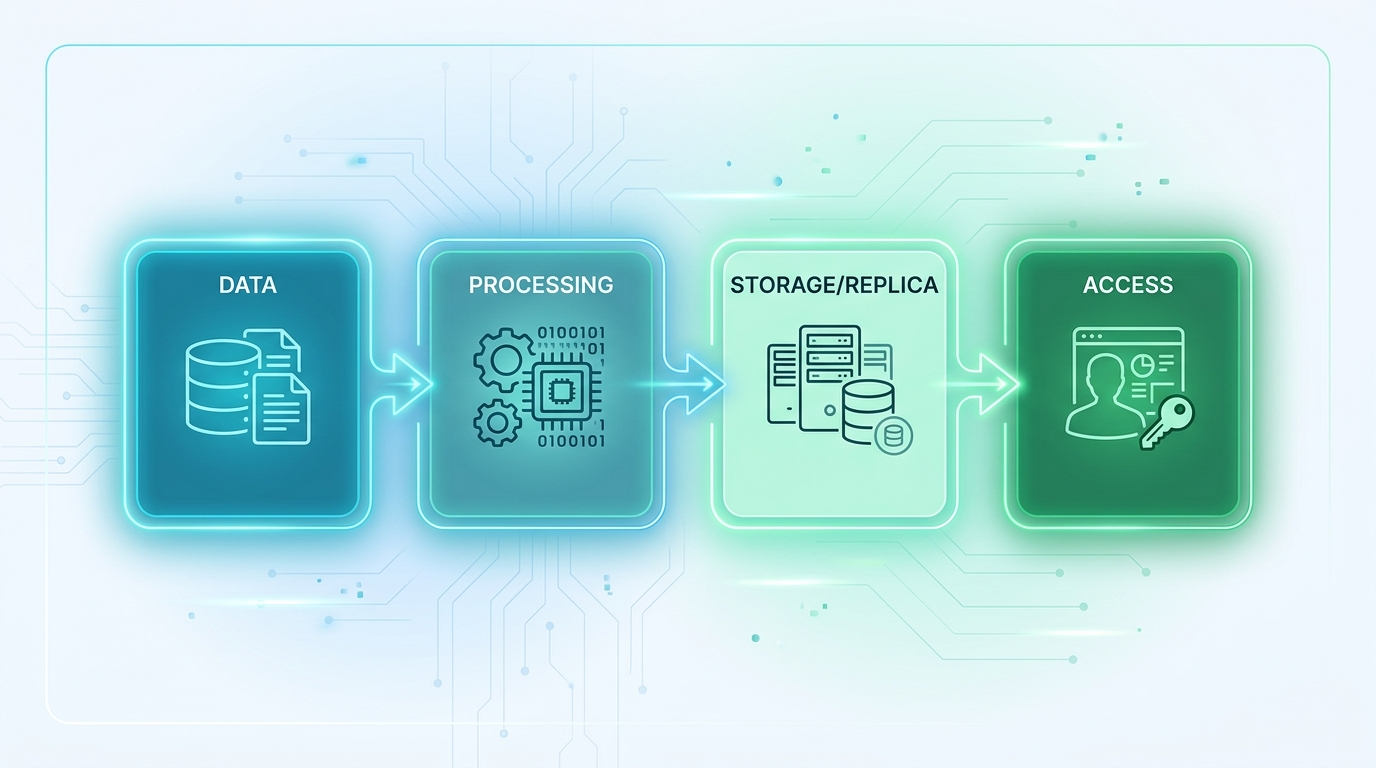
- Where does your data enter your system?
- Where does it get processed?
- Where does it get stored or replicated?
- Who can access it—and from where?
Most businesses don’t map this completely. Not because they don’t care.
But because systems are designed in layers and control gets diluted across them.
The Shift Businesses Need to Make
The mindset has to change.
From: “We are using secure systems”
To: “We understand how our data behaves inside those systems”
That’s the difference, Because security without visibility is limited. And compliance without understanding is fragile.
Where This Is Heading
This doesn’t get simpler from here. It gets more complex.
More regions.
More integrations.
More AI-driven processing.
Which means more movement and less natural control.
So the companies that adapt won’t be the ones that restrict technology. They’ll be the ones that:
- understand it deeply
- question its assumptions
- and design around control, not just convenience
Conclusion
Data sovereignty isn’t about stopping data from moving.
That’s not realistic.
It’s about knowing how it moves and what that means for your business.
Because in 2026:
Your data doesn’t stay where you store it.
It travels.
And if you don’t understand that movement,
You’re not fully in control of what you rely on the most. And data is only one layer of a much larger digital sovereignty challenge.
Because even if you understand your data,
the infrastructure it runs on introduces a completely different kind of dependency altogether.
FAQs
1. What is data sovereignty?
Data sovereignty means your data is governed by the laws of the country where it is stored or processed.
2. What does data sovereignty mean for businesses?
It means businesses must know where their data is stored, how it moves, and which regulations apply.
3. Does data movement affect data sovereignty? (Replaced one)
Yes. As data moves across systems and regions, it becomes subject to multiple legal frameworks, reducing control.
4. Does cloud computing affect data sovereignty?
Yes. Cloud systems distribute and process data globally, which can reduce visibility and control.
5. Why is data sovereignty important in 2026?
Because data moves across systems and regions, increasing compliance risks and reducing direct control.
Sorry, the comment form is closed at this time.