
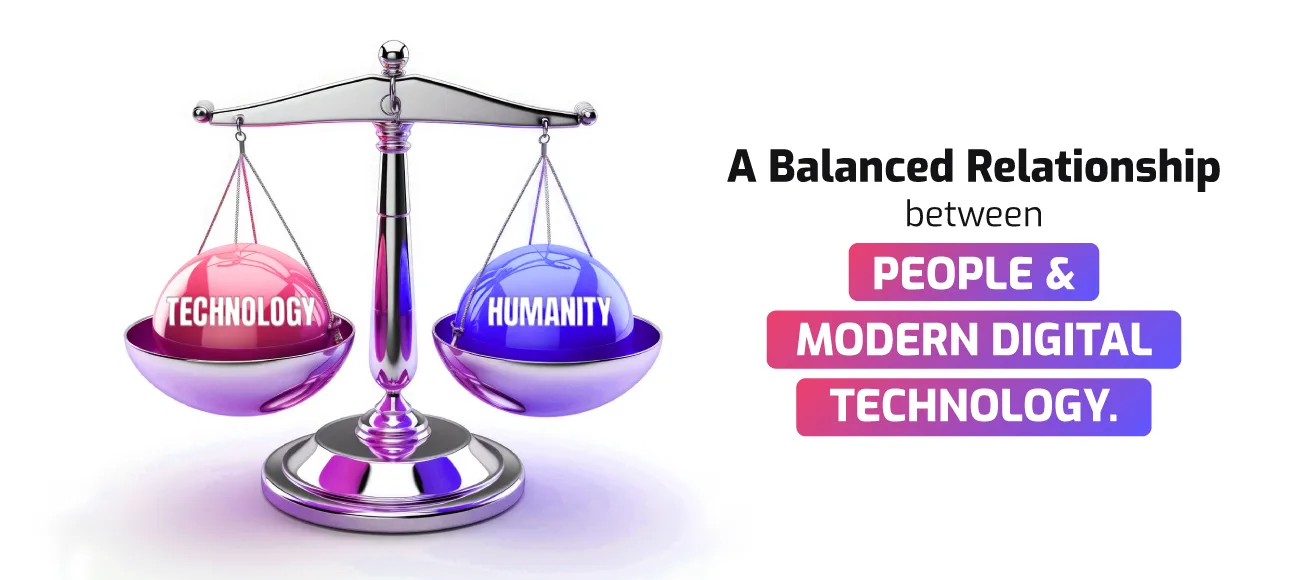
29 Dec Digital Ethics: Balancing Technology and Humanity
Introduction: The Human Side of Technology
We live in a world where technology shapes almost everything — how we live, work, and interact. As innovations like AI, automation, and smart devices continue to grow at a rapid pace, where one important question becomes unavoidable:
Are we using technology in a way that respects people, protects rights, and supports society?
This is where Digital Ethics steps in
What is DIGITAL ETHICS?
Digital ethics is a set of principles and values that guide how we design, use, and manage technology. It focuses on creating digital systems that respect people, promote fairness, and remain transparent.
In simple words, digital ethics equals responsible technology use.
Why Is Digital Ethics IMPORTANT?
Because technology is powerful — it can improve lives or disrupt them.
From data leaks to AI bias, irresponsible tech can create serious ethical issues. Digital ethics ensures technology remains safe, fair, transparent, and human-centered.
KEY PILLARS of Digital Ethics
1. Fairness & Bias-Free Technology
Technology should treat everyone equally. This means AI systems must avoid discrimination, whether it’s related to gender, race, age, or background. Fair tech ensures every user gets equal respect and equal opportunity.
2. Transparency & Explainability
People deserve to know how and why a digital system makes decisions. Ethical technology clearly explains what it does with data or how an AI reaches a conclusion, helping users trust it more.
3. Privacy & Data Protection
Our personal information — photos, messages, habits — must be kept safe. Ethical technology collects only what’s necessary, and allows users to stay in control of their data.
4. Accountability & Responsibility
If a digital system makes a mistake or causes harm, someone must take responsibility. Ethical tech ensures companies and creators are answerable for the technology they build and how it affects people.
5. Human-Centered Design
Technology should support people, not replace or manipulate them. Human-centered design means creating tools that are safe, easy to use, accessible to everyone, and focused on improving real human lives.
BENEFITS of Ethical Technology
When technology follows ethical principles, it becomes more trustworthy, safe, and genuinely useful. Ethical tech leads to fair and reliable AI systems, safer online experiences, and stronger privacy protection, reducing risks like bias, misuse, or data leaks. It also encourages responsible innovation, helping companies build new solutions without harming users. Most importantly, it improves how humans and machines work together by making technology more transparent, respectful, and aligned with real human needs. Overall, ethical technology creates a digital world that is fair, safe, and supportive for everyone.
Real-World EXAMPLES
- Face recognition rule to prevent misuse
- GDPR and privacy laws protecting user data
- AI transparency frameworks used by global companies
- Ethical automation in healthcare, finance, and smart cities
- Bias detection tools built to audit algorithms
These steps show how companies and governments are beginning to prioritize ethics in tech.
The FUTURE
As technology becomes smarter, ethics must become stronger.
Future technologies will be designed to put people first, with AI that understands and supports human needs. Digital platforms will become safer and more transparent, and data will be handled in a way that protects everyone’s rights. Smart cities and connected devices will be built responsibly, keeping ethics in mind. With clear accountability for AI decisions, digital ethics will help ensure that innovation benefits society instead of causing harm.
SUMMARIZE
Digital ethics isn’t just a rulebook — it’s a mindset.
It teaches us that technology isn’t just a machine, but a tool that must respect humanity.
When innovation and responsibility go together, we create a future where technology is fair, safe, transparent, inclusive, and truly human-focused.
Sorry, the comment form is closed at this time.